
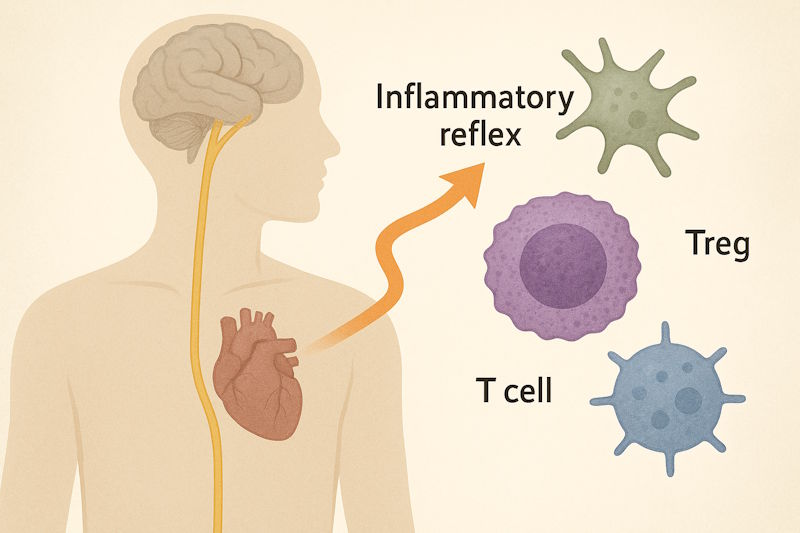
This year’s Nobel Prize in Physiology or Medicine was awarded to Mary E. Brunkow, Fred Ramsdell, and Shimon Sakaguchi for their discoveries of regulatory T cells and the role of the FOXP3 gene in peripheral immune tolerance. Their research revealed how the body’s own “peacekeepers” prevent the immune system from attacking self-tissues—an essential insight for understanding and preventing autoimmune diseases.
The link to vagus nerve stimulation
The vagus nerve serves as a key connection between the brain and the immune system. By stimulating the nerve—for example through INMEST—the body’s inflammatory reflex is activated, helping to calm excessive immune responses. Studies show that vagus nerve stimulation can influence both the number and function of regulatory T cells and modulate FOXP3 expression, resulting in reduced inflammation.
Practical implications for treatment
The discovery of Tregs and FOXP3 opens up new therapeutic strategies combining nerve stimulation and immune regulation. This may lead to more personalized treatments for chronic inflammatory and autoimmune diseases, with fewer side effects than conventional therapies. Research supported by the foundation demonstrates how these mechanisms can be applied in practice to restore balance between the nervous and immune systems.