
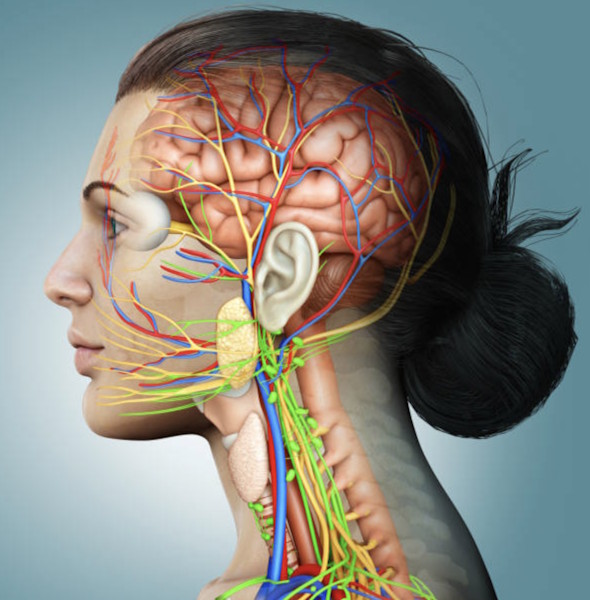
A study conducted in 2018 in Tokyo investigated the effects of INMEST (formerly known as kinetic oscillation stimulation, KOS) using an advanced MRI scanner (magnetic resonance imaging). The study, which included eight healthy participants, showed that the stimulation activated several regions in the limbic system and the dorsal vagus nucleus in the brainstem.
Interestingly, one of the regions activated in the limbic system was the hypothalamus. This, together with the activation of the vagus nucleus, strongly suggests that INMEST has the potential to activate the parasympathetic branch of the autonomic nervous system. This suggests not only anti-inflammatory effects of the treatment, but also indicate that INMEST could counteract dysautonomia caused by insufficient activation of the parasympathetic nervous system. The latter is a common clinical challenge in patients with Parkinson’s disease (PD), where a substantial proportion of patients develop dysautonomia symptoms for which there are limited treatment options available. Other diseases associated with dysautonomia are myalgic encephalomyelitis (ME), a condition in which INMEST has been shown to provide symptom relief, and amyotrophic lateral sclerosis (ALS).
Among other limbic regions activated by INMEST was the parahippocampal gyrus, important for memory encoding and retrival, which is significantly affected in Alzheimer’s disease (AD) and in some patients with PD who have cognitive impairment. Several other regions in the brain were also activated with the treatment, including the prefrontal cortex and insula which both have key roles in regulation of emotions and decision-making.
The results open up new possibilities for using INMEST treatment not only in conditions where vagus nerve function plays a key role, such as chronic inflammatory diseases, but also in neurodegenerative disorders.